

A woman in her early 50s had been on an antidepressant for 20 years. She wasn’t sure it was still working. She felt flat. A little disinterested in life. Foggy most days. Her mood had never fully lifted, but she’d been refilling the prescription so long that nobody had stopped to ask whether something else was going on.
When she finally started looking into root causes, the answer turned out to be hormonal. A low-dose bioidentical hormone protocol, some dietary changes, and attention to gut health shifted things enough that she quietly stopped her antidepressant on her own. Not dramatically. Gradually. Six months after starting the work, she described feeling better than she had in years.
Nobody had ever asked her about her gut.
The Gut Holds More Neurotransmitter Receptors Than the Brain
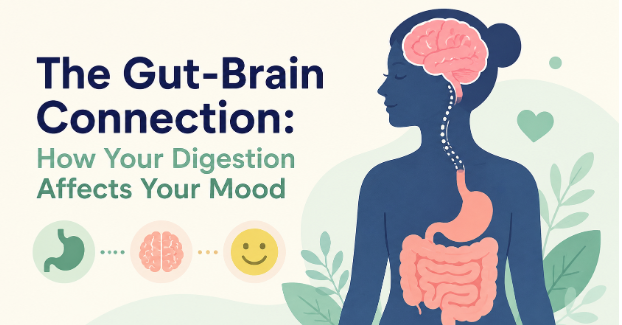
This surprises most people. The greatest concentration of neurotransmitter receptors in the body is not located in your skull. It’s in your gut. This is called the enteric nervous system, and it functions like a second brain that runs along your digestive tract.
Serotonin, dopamine, norepinephrine. All of the chemical messengers most people associate with mood and mental health are being received, processed, and influenced by what is happening in your gut.
Roughly 90% of your serotonin is produced there. Not in your brain.
So when your gut is inflamed, when your microbiome is out of balance, when you’re chronically constipated or unable to absorb nutrients properly, the direct result is reduced neurotransmitter availability. Not just digestive symptoms. Mood symptoms.
What “Gut Health” Actually Means for Your Brain Chemistry
The gut microbiome is the ecosystem of bacteria, fungi, and other microorganisms living in your digestive tract. Research has increasingly connected imbalances in this ecosystem to anxiety, depression, OCD, and conditions on the autism spectrum. Scientists describe this area of study as being at the tip of the iceberg.
There are a few ways this plays out clinically.
First, a disrupted microbiome changes how your body processes nutrients. If you have the best diet in the world but your gut can’t absorb it properly, your brain doesn’t get the building blocks it needs for healthy chemistry. Vitamin D, B12, magnesium, iron. All of these affect neurotransmitter production and receptor function. All of them are absorbed through the gut.
Second, inflammation at the gut level directly reduces serotonin availability. If your gut lining is inflamed, you’re producing less of the chemical your brain needs to regulate mood.
Third, constipation specifically causes problems that most people never connect to mood. When you’re not eliminating regularly, hormone metabolites back up in your system. Sex hormone balance gets disrupted. Neurotransmitters can’t circulate the way they’re supposed to. The whole downstream system feels it.
Regular bowel movements are, in a literal physiological sense, connected to your mood. It sounds strange. It’s accurate.
Why Anxiety Isn’t Always “Just Anxiety”
Most primary care visits for anxiety end the same way. A five-minute appointment, a prescription for an SSRI or anti-anxiety medication, maybe a referral for counseling. The visit doesn’t include any questions about bowel habits, gut health, or nutrient absorption.
That gap matters more than most people realize.
There is a condition called POTS (postural orthostatic tachycardia syndrome), a type of autonomic nervous system dysfunction that commonly presents as anxiety with a racing heart. Patients with undiagnosed POTS often get labeled anxious and handed antidepressants, because a short primary care visit will not find what’s actually happening in the autonomic nervous system.
Perimenopause does the same thing to women who’ve never had mood issues in their lives. Estrogen stabilizes serotonin production, supports dopamine and GABA, and helps regulate BDNF, which is involved in learning and memory. When estrogen starts fluctuating erratically in the years before menopause, all of those systems get disrupted. A woman who had no history of anxiety or depression suddenly has significant brain fog and mood instability at 42. Nothing else changed in her life. The hormonal shift is driving it.
In a conventional five-minute visit, that gets labeled as a new anxiety disorder. In a functional medicine framework, it’s a hormonal root cause worth investigating.
The SSRI Question Nobody Is Asking
SSRIs have their place. For someone experiencing debilitating depression, suicidal ideation, or panic attacks that are preventing them from functioning, medication is appropriate and sometimes necessary.
But a significant portion of people on antidepressants were never asked about their gut health, their hormones, their nutrient levels, or their bowel habits before the prescription was written. And many of them have been refilling that prescription for years without anyone revisiting whether it’s still needed or whether the original cause was ever addressed.
Long-term SSRI use comes with real side effects. Weight gain. Low libido. Emotional numbing. Some research points to potential worsening of depression over time for certain patients. That doesn’t mean stopping is always the right move. It means the question is worth asking.
Coming off an antidepressant responsibly is a slow process that should happen with clinical support. But it can happen. And for some patients, addressing gut health, hormonal imbalances, and nutrient deficiencies creates enough change that the medication becomes less necessary over time.
Sugar, Caffeine, and the Self-Medicating Brain
ADHD is an interesting case study in this connection. The condition involves low dopamine and low norepinephrine. Stimulants relax the ADHD brain by raising those levels.
Sugar and caffeine are stimulants. They give dopamine-depleted brains a hit that feels like focus or energy. This is why many people with undiagnosed ADHD reach for these substances throughout the day. It’s not a willpower failure. It’s the brain trying to correct a neurotransmitter imbalance with available tools.
The problem is that those tools are not sustainable. Blood sugar spikes followed by crashes worsen the underlying instability. Caffeine dependence masks what the brain actually needs. Neither addresses the root chemistry.
Neurotransmitter panels can test where dopamine, serotonin, norepinephrine, and other messengers actually land for an individual patient. That data changes what treatment looks like.
What a Gut-Focused Mental Health Approach Actually Includes
A comprehensive stool test reveals microbiome composition, inflammation levels at the gut, how well nutrients are being absorbed, and whether infections, parasites, bacteria, or yeast are present. It’s a starting point that conventional mental health care doesn’t use at all.
From there, addressing gut inflammation, restoring absorption, and rebalancing the microbiome can create meaningful shifts in brain chemistry. This is not a replacement for all mental health treatment. It’s an additional layer that most patients have never had access to.
The peptide BPC-157 has been used in this context. It reduces gut inflammation and improves nutrient absorption, which in turn improves the neurotransmitter environment. Bowel regularity support, dietary changes that reduce inflammatory load, and targeted supplementation for deficient vitamins all play a role.
For women whose mood symptoms emerged during perimenopause, bioidentical hormone therapy can restore the estrogen levels that serotonin and dopamine production depend on.
These aren’t fringe approaches. They’re what happens when you take the gut-brain connection seriously and build a treatment plan around it.
What This Means for You
If you’ve been on an antidepressant for years and feel like something is still missing, or if you’ve been told you have anxiety but the treatment hasn’t actually resolved it, the gut-brain connection is worth understanding.
The question isn’t whether mental health conditions are real. They are. The question is whether every root cause has been found. Most haven’t been.
Gut health, hormone balance, neurotransmitter levels, and nutrient absorption are all inputs to how your brain functions. A five-minute visit that ends with a prescription hasn’t looked at any of them. That’s not a personal failure. It’s a gap in how care is typically delivered.
Finding someone who will look at the whole picture takes more time and more testing. For many people, it’s also what finally moves the needle.
About the Author: This article was written by the clinical education team at Med Matrix, a functional medicine clinic in South Portland, Maine. Med Matrix serves over 3,000 patients with a provider team that specializes in root-cause testing, hormone optimization, and personalized treatment plans.